If you are planning to study in Germany as an international student, there is one financial requirement that stands between you and your student visa — the blocked account (Sperrkonto).
Without it, the German Embassy will not issue your student visa. Without your visa, you cannot enroll. And without enrollment, your dream of studying at TU Munich, RWTH Aachen, Heidelberg, or any of Germany’s world-class tuition-free universities remains exactly that — a dream.
The good news is that opening a blocked account is completely straightforward when you know exactly what to do, which provider to choose, and in what sequence to execute each step.
This guide covers everything:
- What a blocked account actually is and why Germany requires it
- How much you need to deposit in 2026
- The three best providers compared — Fintiba, Expatrio, and Coracle — fees, features, processing times, and health insurance bundles
- The complete 5-step process from choosing a provider to applying for your visa
- Which provider is best for your specific situation
- Health insurance options to bundle with your blocked account
- Regular banking setup once you arrive in Germany
By the end of this guide, you will know exactly which blocked account to open, how to open it, and what to do next.
Let us get started.
Table of Contents
What Is a Blocked Account (Sperrkonto) and Why Does Germany Require It?
A Sperrkonto (literally “blocked account” in German) is a special type of bank account specifically designed to prove to German immigration authorities that you have sufficient financial resources to support yourself during your studies in Germany.
Here is how it works in practice:
You deposit a lump sum — the full annual required amount — into the blocked account before applying for your German student visa.
The funds are “blocked” — meaning you cannot withdraw the full amount immediately. Instead, a fixed monthly amount is released to you each month after you arrive in Germany.
The German Embassy receives a confirmation certificate from your blocked account provider showing that the required funds are held and will be released monthly — satisfying their financial sufficiency requirement for visa issuance.
After arrival, approximately €992–€1,027 per month is released to your regular German bank account (which comes included with your blocked account from most providers), functioning as a guaranteed monthly living allowance throughout your studies.
Why Germany specifically requires this:
Germany offers zero tuition at all public universities to international students — one of the most extraordinary education policies in the world. In return, Germany requires students to demonstrate they can cover their own living costs. The blocked account system is Germany’s way of ensuring international students do not arrive without financial support and require social assistance.
It is not a tax. It is not a fee. The money is entirely yours — it is simply held in a structured way that ensures you have a sustainable monthly income throughout your program.
How Much Do You Need in Your Blocked Account for Germany in 2026?
This is the question every Germany-bound student asks first — and the answer changes periodically as the German government updates its financial sufficiency thresholds.
The 2026 blocked account requirement:
As of 2026, the German Embassy requires approximately €11,208 per year (approximately €934 per month) for most student visa applications. Some sources report updated figures of €11,904 per year (approximately €992 per month) — the exact current requirement should always be verified directly at the German Embassy website of your home country before submitting your application, as these figures are subject to annual adjustment.
Important clarifications:
The blocked account amount covers living expenses only — accommodation, food, transportation, books, and personal expenses. It does not cover:
- Tuition fees — zero at all German public universities for international students
- Health insurance — arranged separately (more on this below)
- Travel costs — your one-time airfare to Germany
Do you need the full annual amount upfront?
Yes. You must deposit the complete annual amount (approximately €11,208–€11,904) into your blocked account before applying for your visa. You cannot open the account with a partial amount and add to it later for visa purposes — the blocking certificate must show the full amount.
What happens to funds you do not use?
Any funds remaining in your blocked account when you close it — whether because you received a scholarship, worked part-time (F-1 students can work up to 20 hours per week in Germany), or simply spent less than the monthly release — are returned to you in full when the account is closed.
The Three Best Blocked Account Providers for Germany 2026 — Full Comparison
Three providers dominate the German blocked account market for international students in 2026: Fintiba, Expatrio, and Coracle. All three are officially recognized by German Embassies worldwide and provide the blocking certificate accepted for student visa applications.
Here is the complete head-to-head comparison:
🏆 Fintiba — Most Popular and Most Widely Trusted
Opening Fee: €49 – €89 (depending on plan selected) Monthly Fee: €5 per month Process: Fully online — open from any country with a smartphone and passport Customer Support: Multilingual — available in English, German, Arabic, Mandarin, and other languages Health Insurance Bundle: Options available — can bundle Mawista or other partners Additional Features: Current (regular) bank account included — your monthly releases land directly in your Fintiba current account
👉 Official Website: fintiba.com
Fintiba detailed review:
Fintiba is the most widely used and most recommended blocked account provider among international students heading to Germany — and for good reason. It has processed hundreds of thousands of applications since its launch and has an established track record of producing blocking certificates that are accepted without issue at German Embassies worldwide.
The online account opening process at Fintiba is straightforward and fully digital — you complete identity verification using your smartphone camera (scanning your passport and taking a selfie video), which the system processes using automated verification technology. Most accounts are fully verified within 1–3 business days.
Fintiba’s two main plans:
Basic Plan (€49 opening fee): Provides the blocked account and blocking certificate only. Does not include a current account for monthly releases — you arrange your own German bank account to receive monthly disbursements.
Complete Plan (€89 opening fee): Provides the blocked account, blocking certificate, AND a current account where monthly releases are automatically deposited. The current account includes a debit Mastercard usable for daily expenses in Germany. This is the most popular plan because it provides everything in one place.
Monthly fee: Fintiba charges €5 per month while the blocked account is active. Over a typical 12-month period, this adds €60 to your total cost.
Best for: Students who want the market-leading, most widely trusted provider with the strongest track record of Embassy acceptance and the most established customer support network.
🥈 Expatrio — Best for Combined Blocked Account + Health Insurance Bundle
Opening Fee: €49 – €89 (depending on plan selected) Monthly Fee: €5 per month Process: Fully online — open from any country Customer Support: Multilingual — English, German, and other major languages Health Insurance Bundle: Options available — Expatrio’s health insurance bundle is particularly competitive Additional Features: Current account included — same as Fintiba
👉 Official Website: expatrio.com
Expatrio detailed review:
Expatrio is Fintiba’s closest competitor and the second most popular blocked account provider among Germany-bound international students. It offers a nearly identical feature set to Fintiba — fully online opening, multilingual support, included current account, and health insurance bundling — at the same fee structure.
Where Expatrio genuinely differentiates itself is health insurance bundling. Expatrio has built a particularly streamlined health insurance package specifically designed for international students who need to satisfy Germany’s mandatory health insurance requirement alongside their blocked account. Handling both requirements through a single provider simplifies the administrative burden significantly.
Expatrio’s bundled health insurance: Expatrio partners with specific insurance providers to offer international student health insurance that can be purchased and managed through the same Expatrio dashboard as your blocked account. For students who want to minimize the number of providers they deal with before arriving in Germany, this integration is a genuine advantage.
Processing time: Comparable to Fintiba — most accounts verified within 1–3 business days.
Best for: Students who want to combine their blocked account and health insurance in a single provider, minimizing administrative complexity and managing both requirements through one account dashboard.
🥉 Coracle — Best for Zero Monthly Fees
Opening Fee: €49 – €89 (depending on plan) Monthly Fee: FREE — no ongoing monthly fee Process: Fast — comparable processing to Fintiba and Expatrio Customer Support: Multilingual — available in multiple languages Health Insurance Bundle: Options available Additional Features: Current account included
👉 Official Website: coracle.de
Coracle detailed review:
Coracle is the financially most efficient blocked account provider for students who want to minimize ongoing costs. While Fintiba and Expatrio both charge €5 per month while the blocked account is active, Coracle charges zero monthly fee — a meaningful saving of €60 over a 12-month period.
The opening fee structure is the same as Fintiba and Expatrio (€49–€89 depending on plan), so the differentiation is entirely in the absence of ongoing monthly charges.
Coracle’s trade-off is that it is a newer and less established provider compared to Fintiba — meaning its track record at specific German Embassies is less extensive. For most countries, Coracle’s blocking certificate is fully accepted. However, students from countries with particularly strict Embassy documentation requirements occasionally report additional questions when using newer providers.
Processing speed: Coracle markets itself specifically on speed — fast verification and fast certificate issuance is a key part of its value proposition.
Best for: Students who want to minimize total blocked account costs and for whom the €60 annual monthly fee saving is meaningful. Also good for students with tight timelines who need fast certificate issuance.
Fintiba vs Expatrio vs Coracle — Complete Side-by-Side Comparison Table
| Feature | Fintiba | Expatrio | Coracle |
|---|---|---|---|
| Process | Online | Online | Fast/Online |
| Opening Fee | €49–€89 | €49–€89 | €49–€89 |
| Monthly Fee | €5/month | €5/month | FREE |
| Annual Total Cost | €109–€149 | €109–€149 | €49–€89 |
| Customer Support | Multilingual ✅ | Multilingual ✅ | Multilingual ✅ |
| Health Insurance Bundle | Available ✅ | Best bundled option ✅ | Available ✅ |
| Current Account Included | Yes ✅ | Yes ✅ | Yes ✅ |
| Trust & Track Record | Highest ⭐⭐⭐⭐⭐ | High ⭐⭐⭐⭐ | Growing ⭐⭐⭐ |
| Best for | Maximum trust | Insurance bundle | Lowest cost |
Which Provider Should You Choose? — Decision Guide
Choose Fintiba if:
- This is your first time applying for a German student visa and you want maximum certainty that your blocking certificate will be accepted at any German Embassy worldwide
- Your Embassy has specific documentation requirements and you want the provider with the broadest acceptance record
- You want the most established customer support network for troubleshooting any issues
Choose Expatrio if:
- You want to handle your blocked account AND health insurance through a single provider
- Minimizing administrative complexity before arrival in Germany is a priority for you
- You want a bundled package that covers both mandatory financial requirements (blocked account + insurance) in one place
Choose Coracle if:
- Minimizing total cost is your primary concern
- You want to save the €60 annual monthly fee that Fintiba and Expatrio charge
- You have a relatively straightforward visa situation at a standard German Embassy
The Complete 5-Step Process to Open Your German Blocked Account
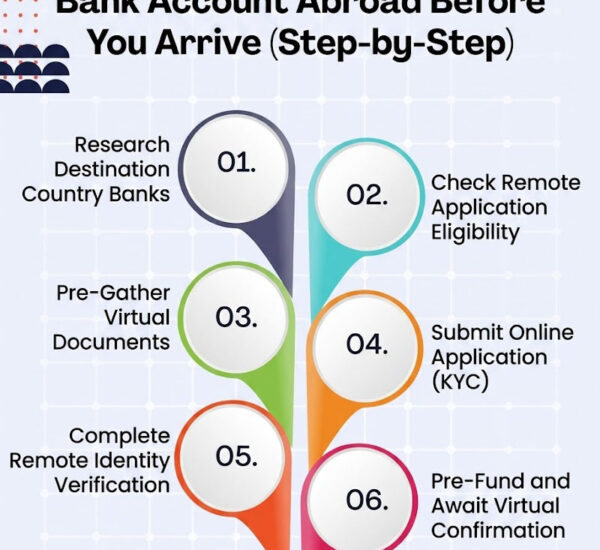
The image this post is based on outlines five clear steps. Here is each one in complete detail.
Step 1: Choose Your Provider
Based on the comparison above, select the provider that best matches your specific needs — maximum trust (Fintiba), insurance bundling (Expatrio), or minimum cost (Coracle).
Before choosing, confirm:
- Which providers are accepted at the specific German Embassy in your country (call or email the Embassy’s visa section directly if you are unsure)
- Whether you want health insurance bundled with your blocked account or arranged separately
- Whether you want the basic plan (blocked account only) or complete plan (blocked account + current account)
Timing: You should choose your provider and begin the account opening process at least 4–6 weeks before your intended visa application date. This allows sufficient time for account verification, fund transfer, and certificate issuance.
Step 2: Complete the Online Application
Visit your chosen provider’s official website and complete the online registration and identity verification process.
What you will need for account opening:
- ✅ Valid passport (the same passport you will use for your visa application)
- ✅ Email address for account registration
- ✅ Smartphone or webcam for identity verification video
- ✅ Personal information: full legal name (exactly as in passport), date of birth, country of nationality, intended German university
Identity verification process: All three providers use automated digital identity verification — you photograph your passport and complete a short video selfie or liveness check through their app or web interface. This process takes approximately 10–15 minutes and is processed by automated systems within 24–72 hours.
Important: Your name in the blocked account must match your passport exactly, including any middle names or name components that appear in your passport. Any discrepancy between your blocked account documents and your passport is a potential visa complication.
Step 3: Transfer Funds — The Required Amount
Once your account is verified and active, you receive an IBAN (International Bank Account Number) for your blocked account. Transfer the required amount from your home country bank account to this IBAN.
2026 required transfer amount: Approximately €11,208 per year (verify current exact amount at your German Embassy before transferring — figures are updated periodically).
Transfer options:
International wire transfer (SWIFT): Transfer from your home bank account directly to your Sperrkonto IBAN using the SWIFT international wire transfer system. This is the most common method. Fees vary by your home bank — typically $15–$45 per transfer.
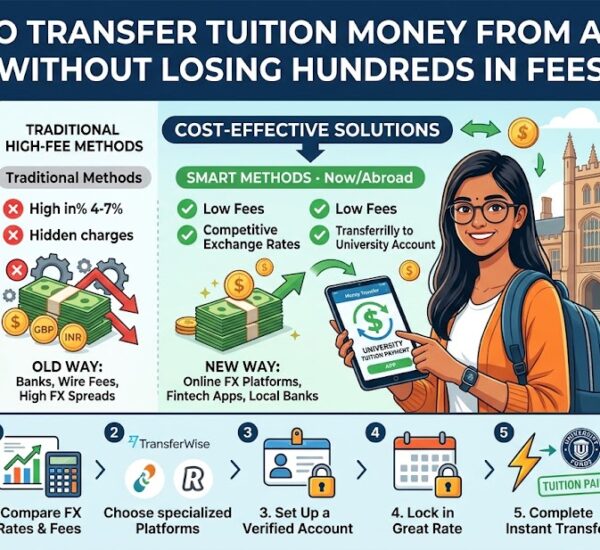
Wise transfer (Recommended): Using Wise to transfer money from your home country to your blocked account IBAN typically saves 50–80% in transfer fees compared to traditional bank wire transfers. Wise also provides more favorable exchange rates. For a transfer of approximately €11,208, Wise could save you €150–$400 compared to a traditional bank wire. 👉 wise.com
Timing: Allow 1–5 business days for the international wire transfer to reach your blocked account after initiation. Weekend and holiday delays can add time. Factor this into your overall timeline.
After transfer: Your provider will detect the incoming funds, confirm the deposit, and update your account status to show the full required amount is held. You can then request your blocking certificate.
Step 4: Receive Your Blocking Certificate (Confirmation)
Once your funds are confirmed in your blocked account, your provider issues a blocking certificate (Sperrkontobescheinigung) — the official document you submit with your German student visa application.
What the blocking certificate contains:
- Your full legal name (matching your passport)
- Your account number and IBAN
- The total amount held in the blocked account
- Confirmation that the amount will be released in monthly installments during your studies
- Provider’s official stamp and/or digital signature
- Date of issuance
Timing: Most providers issue the blocking certificate within 1–3 business days after your funds are confirmed. Some offer express certificate issuance for students with urgent visa application deadlines.
Format: Most providers issue certificates digitally (PDF via email) and optionally in physical form by post. Check whether your specific German Embassy requires a physical certificate or accepts a digital PDF — most Embassies now accept digital certificates, but some have specific requirements.
Store this certificate permanently. You may need it not just for your initial visa application but for visa renewals, residence permit applications, and university enrollment.
Step 5: Apply for Your German Student Visa
With your blocking certificate in hand, you can now submit your complete German student visa application at the German Embassy or Consulate in your home country.
Complete visa application document checklist:
Identity Documents:
- ✅ Valid passport (validity at least 6 months beyond your intended stay, plus minimum 2 blank pages)
- ✅ Passport-sized photographs meeting German visa photo specifications
- ✅ Completed German visa application form (available at your Embassy’s website)
Academic Documents:
- ✅ University enrollment confirmation or admission letter from your German university
- ✅ Academic transcripts and degree certificates (with certified German or English translations)
- ✅ Language proficiency certificates (IELTS/TOEFL for English programs; TestDaF/DSH for German programs)
Financial Documents:
- ✅ Blocked account confirmation certificate (Sperrkontobescheinigung) — the document from Fintiba, Expatrio, or Coracle
- ✅ Any scholarship award letters (DAAD, university scholarships, etc.)
Insurance Documents:
- ✅ Health insurance certificate valid from your arrival date in Germany
Visa Fees:
- ✅ German visa application fee payment — currently €75 for national visas (student visa)
Health Insurance — The Second Mandatory Financial Requirement for Germany
Your blocked account handles one mandatory financial requirement. Health insurance is the second — and it is equally non-negotiable.
All students enrolled at German universities must have valid health insurance from the day they arrive in Germany. You cannot complete your university enrollment (Immatrikulation), receive your student card, or maintain your residence permit without valid health insurance documentation.
The Two Health Insurance Tracks in Germany:
Track 1: German Public Health Insurance (GKV — Gesetzliche Krankenversicherung)
This is the most comprehensive and typically most cost-effective option for students under 30.
- TK (Techniker Krankenkasse): Germany’s most popular health insurer among international students. Excellent English-language customer service and app. Monthly student rate: approximately €110–€120. 👉 tk.de/en
- AOK: Regional public insurer network covering all German states. Strong local support network. Similar rates to TK. 👉 en.aok.de
- BARMER: Strong digital services and app management. Popular among younger international students. 👉 barmer.de/en
Track 2: Private International Student Insurance (for specific situations)
For students who do not yet qualify for German public insurance (over 30 years old, visiting students, or first-semester transition periods):
- Mawista Student: Purpose-built student insurance for Germany. Accepted by German universities for enrollment. 👉 mawista.com
- Expatrio Health Insurance Bundle: If using Expatrio for your blocked account, their bundled health insurance option is competitively priced and convenient. 👉 expatrio.com
Action required: Contact TK or AOK directly to begin health insurance enrollment as soon as you receive your university admission letter. You can initiate enrollment before arriving in Germany, and your membership certificate will be ready for submission at university enrollment.
Banking in Germany After Arrival — What Happens to Your Monthly Releases
Your blocked account releases approximately €934–€992 per month after you arrive in Germany. But where does this money go, and what other banking do you need?
If you chose the Complete Plan at Fintiba, Expatrio, or Coracle: Your provider includes a current (regular) bank account alongside your blocked account. Monthly releases automatically transfer to this current account. Your Visa debit card (included with most complete plans) gives you immediate access to your monthly release for daily expenses.
Additional German banking you should set up:
N26 — Best Free Digital Bank in Germany N26 is Germany’s most popular digital bank with a full German banking license. Open entirely online with just your passport — no address registration required initially. Free basic account. English-language app and customer service. German IBAN accepted everywhere in Germany. 👉 n26.com/en-de
Deutsche Kreditbank (DKB) — Best for Visa Card Benefits DKB offers a free current account with a free Visa credit card usable fee-free worldwide — excellent for students who travel during academic breaks. 👉 dkb.de
Commerzbank — Best for Traditional Branch Access For students who prefer in-person banking support, Commerzbank offers free student accounts with a strong branch network across Germany’s major university cities. 👉 commerzbank.de
Common Mistakes to Avoid When Opening a German Blocked Account
Mistake 1: Waiting too long to open the account. The most common and most costly mistake. Students who begin the process 2 weeks before their visa application find themselves scrambling when transfer delays, verification issues, or Embassy appointment availability create timeline conflicts. Start 4–6 weeks before your visa application date minimum.
Mistake 2: Transferring the wrong amount. Transfer exactly the required amount as specified by your chosen provider and confirmed by your German Embassy. Transferring less than the required amount means your blocking certificate will not show the required threshold, and your visa will be refused.
Mistake 3: Name mismatch between blocked account and passport. Your full legal name in the blocked account must match your passport exactly. If your passport shows “Muhammad Usman Ali Khan” — that is exactly what your blocked account must show. Abbreviations, middle name omissions, or different transliterations will cause visa complications.
Mistake 4: Using an unofficial provider or middleman. Only use officially recognized providers (Fintiba, Expatrio, Coracle, or Deutsche Bank). Third-party services claiming to “set up” a blocked account on your behalf at a lower cost are either scams or using unofficial providers whose certificates may not be accepted by German Embassies.
Mistake 5: Not saving the blocking certificate permanently. Your blocking certificate may be needed months later for residence permit applications, visa renewals, or university enrollment. Save both digital and physical copies immediately upon receipt.
Mistake 6: Forgetting to arrange health insurance separately. Many students assume the blocked account is all they need and arrive in Germany without health insurance. The university enrollment office will not process your enrollment without a valid insurance certificate. Arrange your GKV enrollment (TK or AOK) simultaneously with your blocked account.
Frequently Asked Questions About German Blocked Accounts
Q: Can I withdraw all my money from the blocked account immediately after arriving? No. The account is “blocked” — only the monthly release amount (approximately €934–€992) is made available each month. The remaining balance stays blocked and releases gradually.
Q: What happens to money I do not spend each month? Unspent monthly releases accumulate in your current account. There is no requirement to spend each month’s release.
Q: Can I close the blocked account early? Yes — if you finish your studies, leave Germany, or find alternative funding (such as winning a scholarship), you can close the account and receive any remaining blocked funds returned to you.
Q: Is the blocked account the same as a regular bank account? No. A blocked account is a specialized financial product specifically for the German student visa process. The three providers (Fintiba, Expatrio, Coracle) also provide a regular current account alongside the blocked account for your day-to-day banking needs.
Q: Do DAAD scholars need a blocked account? DAAD scholarships cover living costs directly through monthly stipend payments. Most DAAD scholarship letters can substitute for or supplement the blocked account requirement — check with the specific German Embassy in your country about how to present your DAAD financial documentation.
Q: How long does the entire process take from start to visa application? Typical timeline: Account opening and verification (1–3 days) + fund transfer (1–5 days) + certificate issuance (1–3 days) = approximately 1–2 weeks from start to certificate receipt. Add your visa application appointment wait time (varies by country, can be 4–12 weeks in peak season) for your total timeline.
Your Complete Blocked Account Action Checklist
Use this checklist to ensure you complete every step correctly and on time.
6 Weeks Before Visa Application:
- ☐ Confirm current blocked account required amount at German Embassy website for your country
- ☐ Choose your provider (Fintiba, Expatrio, or Coracle) based on your priorities
- ☐ Register and complete online identity verification at chosen provider
- ☐ Initiate international wire transfer or Wise transfer of required amount to Sperrkonto IBAN
- ☐ Contact TK or AOK to begin health insurance enrollment process
4 Weeks Before Visa Application:
- ☐ Confirm funds have arrived in blocked account
- ☐ Request blocking certificate from provider
- ☐ Download and print blocking certificate — save digital copy permanently
- ☐ Receive health insurance confirmation from TK, AOK, or chosen provider
- ☐ Compile all visa application documents
Visa Application Day:
- ☐ Bring original blocking certificate (and digital copy on phone as backup)
- ☐ Bring health insurance certificate
- ☐ Bring all academic and identity documents
- ☐ Pay German visa application fee (€75)
After Visa Approval and Arrival in Germany:
- ☐ Complete address registration (Anmeldung) within 14 days of arrival
- ☐ Activate regular bank account (N26 or DKB) using Meldebescheinigung
- ☐ Confirm monthly blocked account releases are active
- ☐ Complete university enrollment with health insurance certificate
- ☐ Apply for residence permit at Ausländerbehörde
Final Thoughts — Open Your Blocked Account Today
The German blocked account is the gateway requirement for one of the world’s greatest educational opportunities — zero tuition at world-class German universities, for international students from every country.
The three providers — Fintiba, Expatrio, and Coracle — all deliver what they promise. The differences between them are real but manageable: Fintiba leads on trust and track record, Expatrio leads on health insurance bundling convenience, and Coracle leads on cost savings through zero monthly fees.
The most important thing is not which provider you choose — it is that you start the process early enough.
Every year, capable, qualified international students miss their visa deadlines not because their blocked account application was rejected, but because they started the process too late and ran out of time. The blocked account itself takes only 1–2 weeks from start to certificate. The visa appointment wait is where time disappears.
Start today. Open your account this week. Transfer your funds before the month ends. Get your certificate. Apply for your visa. Begin your German university journey.
Germany is waiting.
👉 Open Your Blocked Account — Fintiba: fintiba.com
👉 Open Your Blocked Account — Expatrio: expatrio.com
👉 Open Your Blocked Account — Coracle: coracle.de
👉 Health Insurance for Germany — TK: tk.de/en
👉 Best Bank Account in Germany — N26: n26.com/en-de