How to Apply for the Erasmus Mundus Scholarship 2026-2027 — The Complete Step-by-Step Guide for Beginners (From Account Creation to Submission)
You have heard about the Erasmus Mundus Scholarship — one of the most generous, most prestigious, and most life-changing scholarships in the world. A scholarship that pays you €1,400 every single month, covers your full tuition across multiple European universities, pays your airfare, gives you health insurance, and lets you graduate with degrees from two or three different countries simultaneously.
And you want to apply. But you have no idea where to start.
This guide is written specifically for you — the student who has never applied for an international scholarship before, who finds the whole process confusing and intimidating, and who needs someone to walk them through every single step as clearly and simply as possible.
By the end of this guide, you will know:
- Exactly what Erasmus Mundus is and what it pays
- Whether you are eligible to apply
- How to find the right program for you
- Every document you need to prepare
- How to create your account and complete your application
- How to write a motivation letter that actually works — with a real example
- What happens after you submit
- What to do if you are selected — including banking and insurance setup
Read every section. Follow every step. Your Erasmus journey starts here.
Table of Contents
What Is the Erasmus Mundus Scholarship? — Understanding What You Are Applying For
Before anything else, you need to understand what Erasmus Mundus actually is — because it is different from most scholarships you may have encountered.
Erasmus Mundus is not a scholarship for one university. It is a scholarship for a Joint Master’s Degree program — a degree program that is delivered simultaneously across two, three, or sometimes four partner universities in different European countries.
Here is a simple example: Imagine you are accepted to an Erasmus Mundus program in Marine Biodiversity and Conservation. In Year 1, you study in Ghent, Belgium. In Year 2, you study in Plymouth, UK and Algarve, Portugal. At the end, you receive degrees from all three universities — not just one. This multi-country, multi-university experience is what makes Erasmus Mundus unique.
The financial package — what you actually receive:
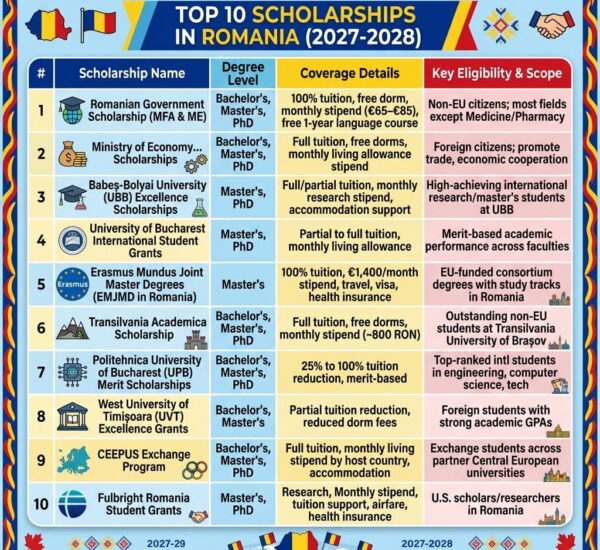
- ✅ €1,400 per month living allowance for the full duration of your program (typically 24 months)
- ✅ Full tuition fees paid directly to each partner university — you pay nothing
- ✅ Travel and installation costs — a one-time travel allowance to help you relocate (€1,000–€3,000 depending on your home country’s distance from Europe)
- ✅ Mandatory health insurance — included in the scholarship package
- ✅ Visa support — financial documentation provided for EU Schengen visa applications
Total value: An Erasmus Mundus scholarship over 24 months is worth approximately €50,000–€70,000 in combined tuition coverage, living allowances, and travel costs. This is genuinely one of the most financially generous graduate scholarships available anywhere in the world.
Who funds it? The European Commission — the executive body of the European Union — funds Erasmus Mundus through the Erasmus+ program. This is EU government money, not a private foundation or corporate grant.
Am I Eligible? — Checking Your Eligibility Before Anything Else
The great news: Erasmus Mundus scholarships are open to students from EVERY country in the world.
Unlike many scholarships that restrict eligibility to specific nationalities or regions, Erasmus Mundus accepts applications from any country on earth. Students from Pakistan, Nigeria, India, Brazil, Egypt, Indonesia, the Philippines, Bangladesh, Kenya, and every other nation are equally eligible.
Basic eligibility requirements:
✅ You must have a completed bachelor’s degree (or equivalent). You must hold a completed bachelor’s degree before the program starts. If you are currently in your final year, you can apply — but you must complete your degree before enrollment begins.
✅ Your degree must be in a relevant field. Each Erasmus Mundus program specifies which undergraduate backgrounds are eligible. A Marine Biodiversity program will require a life sciences or environmental sciences background. A Data Science program will require mathematics, computer science, or engineering. Always check each program’s specific requirements.
✅ You must meet the English language requirements. Most Erasmus Mundus programs are taught in English and require an IELTS score of 6.0–7.0 (or TOEFL equivalent). Some programs in France or Germany may require French or German proficiency for specific study periods.
✅ You must not have lived in one of the consortium countries for more than 12 months in the past 5 years. This rule applies to the “Category A” scholarship (for non-EU students). If you have already lived extensively in Europe, you may only qualify for “Category B” (lower priority) scholarship status.
The age limit? There is NO age limit for Erasmus Mundus scholarships. Whether you are 22 or 45, you can apply if you meet the academic requirements.
Step 1: Find the Right Erasmus Mundus Program
This is the most important step — and the one most students rush through. The right program makes your application strong. The wrong program wastes months of preparation.
How to Search for Programs
Go to the official Erasmus Mundus program catalogue: 👉 eacea.ec.europa.eu/scholarships/emjm-catalogue_en
This is the European Commission’s official list of all currently funded Erasmus Mundus Joint Master programs — the ONLY programs that carry Erasmus Mundus scholarship funding. Do not apply to programs that claim to be “Erasmus” but are not on this list.
How to search effectively:
On the catalogue page, you can filter programs by:
- Field of study: Select your academic discipline
- Country: Select which European countries you want to study in
- Language of instruction: Filter by English, French, German, or other languages
- Duration: Most are 2 years (120 ECTS credits)
Example search: If you have a background in Computer Science and want to study in English, filter by “Information Technology” and “English.” You might find programs like:
- Erasmus Mundus Master in Big Data Management and Analytics (BDMA) — Universities in Belgium, France, Spain, Germany
- European Master in Software Engineering (EMSE) — Universities in France, Spain, Germany, Portugal
Make a shortlist of 3–5 programs that match your academic background, career goals, and country preferences. You will apply to each separately — each Erasmus Mundus program has its own application portal and its own specific deadline.
Check Each Program’s Specific Deadline
This is critical: Every Erasmus Mundus program has its own deadline — typically between October and February of the year before the program starts. There is no single unified deadline.
Go to each program’s official website (linked from the catalogue) and find their current application deadline. Record it immediately.
Example deadlines (varies by program and year):
- Some programs: October 15
- Some programs: December 1
- Some programs: January 15
- Some programs: February 28
Apply as early as possible — scholarships are limited (typically 10–20 per program intake) and early applications sometimes receive earlier decisions.
Step 2: Gather All Your Required Documents
Every Erasmus Mundus application requires a standard set of documents. Prepare every document before you open the application portal — you cannot save an incomplete application on many systems, and scrambling for documents at the last minute causes errors.
The complete document checklist:
✅ 1. Valid Passport
Your passport must be valid throughout the entire duration of the program (2+ years from the program start date). If your passport expires before then, renew it before applying.
Scan: Colour scan of the photo/information page. Resolution must be clear and all text must be readable. File format: PDF or JPEG. File size: Usually under 2MB.
Example: If the program starts September 2026 and runs 2 years to September 2028, your passport must be valid beyond September 2028.
✅ 2. Academic Transcripts
Official transcripts from every university or college you have attended, showing all courses completed and grades received.
What “official” means: The transcript must be issued and stamped/signed by your university’s registrar office — not a self-printed version from your student portal.
Translation requirement: If your transcripts are not in English or in the language of instruction of the program, you need a certified English translation. A certified translation is done by an accredited translator who signs and stamps the translation to confirm its accuracy.
Example: Ahmed is from Egypt. His transcripts are in Arabic. He needs to get them officially translated to English by a certified translation service. He goes to an accredited translation office in Cairo, pays approximately 200–400 Egyptian pounds per page, and receives stamped English translations alongside the original Arabic documents.
✅ 3. Degree Certificate
Your completed bachelor’s degree certificate — the formal document issued by your university confirming you have been awarded your degree.
If you are in your final year and have not yet graduated: Provide an official letter from your university confirming your expected graduation date and that you are on track to complete your degree before the program starts.
✅ 4. Curriculum Vitae (CV)
A professional CV documenting your education, work experience, research experience, publications, conference presentations, awards, and relevant skills.
Erasmus Mundus CV format tips:
- Maximum 2 pages
- Use reverse chronological order (most recent first)
- Include all academic achievements, research projects, internships, and relevant extracurricular activities
- Include technical skills (software, laboratory methods, languages)
- Use a clean, professional format — no creative templates with graphics or unusual fonts
Example CV structure:
EDUCATION
MSc [Program] — [University] (in progress, expected 2027)
BSc Computer Science — [University Name], [City, Country] — Grade: 85% — 2019–2023

RESEARCH EXPERIENCE
Research Assistant — [Lab Name] — [University] — June 2022–August 2023
• Conducted data collection and analysis for [specific project]
• Co-authored paper submitted to [journal]

WORK EXPERIENCE
Software Developer — [Company Name] — [City] — 2023–Present
• [Specific responsibility with measurable outcome]

SKILLS
Programming: Python, R, MATLAB, Java
Languages: Arabic (native), English (C1 — IELTS 7.5), French (B2)
✅ 5. English Proficiency Certificate
If English is not your native language, you need an official English language test certificate.
Accepted tests and minimum scores (varies by program — check specific program requirements):
- IELTS Academic: Usually minimum 6.0–7.0 overall
- TOEFL iBT: Usually minimum 80–100
- Cambridge Advanced English (CAE): Grade B or above
Important: If you completed your undergraduate degree in English (for example, if you studied at an English-medium university), many programs accept an official letter from your university confirming English as the medium of instruction — without requiring a separate IELTS test. Check each specific program’s policy.
✅ 6. Two Letters of Recommendation
Two letters from academic or professional references who know your work directly and can speak specifically to your abilities.
Best recommenders:
- A professor who supervised your thesis or research
- A professor in whose course you performed exceptionally
- A professional supervisor from relevant work experience (for more experienced applicants)
What to give your recommenders: When requesting recommendations, provide your referees with:
- Your CV
- Your motivation letter draft
- The program you are applying to and its specific requirements
- A brief note about which aspects of your work you would like them to highlight
- The submission deadline with 2 weeks of buffer
Recommendation format: Most programs have an online form for recommenders to complete directly. After you enter their email in your application, they receive an automated invitation to submit their reference online. Some programs also accept PDF letters uploaded through your application.
✅ 7. Motivation Letter (Personal Statement)
This is the most important document in your entire application. We will cover this in complete detail in Step 5.
✅ 8. Research Proposal (For Some Programs)
Some Erasmus Mundus programs — particularly those with a strong research component — require a brief research proposal (typically 500–1,000 words) outlining the research question you want to investigate during the program.
Check your specific program’s requirements carefully. Not all programs require this.
✅ 9. Photograph
A recent passport-sized photograph in digital format (JPEG), typically with a white or light background, taken within the last 6 months.
✅ 10. Any Additional Program-Specific Documents
Some programs require:
- Portfolio (for architecture, design, arts programs)
- GRE or GMAT scores (for some management or science programs)
- Medical certificates (rare but occasionally required)
- Proof of professional experience (for programs requiring prior work experience)
Always read each program’s specific requirements page thoroughly before beginning your application.
Step 3: Create Your Application Account
Each Erasmus Mundus program has its own application portal — there is no single unified Erasmus Mundus application system. This means you create a separate account for each program you apply to.
Here is exactly how the account creation process works, using a typical Erasmus Mundus program portal as an example:
Step 3.1: Go to the Program’s Official Website
Example: You have chosen the Erasmus Mundus Master in Marine Biodiversity and Conservation (EMBC+). Go to their official website and find the “Apply” or “Admissions” section.
Step 3.2: Click “Create Account” or “Register”
Most Erasmus Mundus program portals use software like Apply Yourself, Embark, or their own custom systems. The registration page typically asks for:
- First name and last name (exactly as in your passport)
- Email address (use your most reliable personal email — all communications come here)
- Password (create a strong password and save it in a password manager)
- Country of citizenship
- Country of residence
Example:
First Name: Fatima
Last Name: Al-Hassan
Email: [email protected]
Password: [Your secure password]
Country of citizenship: Nigeria
Country of residence: Nigeria
Click “Register” or “Create Account.”
Step 3.3: Verify Your Email
Check your email immediately for a verification link. Click the link within the time limit specified (usually 24 hours). If you do not see the email, check your spam folder.
Step 3.4: Log In to Your Application
After verification, log in with your email and password. You now have an application account for this specific program.
Save your login credentials in a password manager or written note immediately. You will return to this portal many times before submitting, and forgetting your password causes unnecessary stress and delays.
Step 4: Complete the Online Application Form
After logging in, you see your application dashboard. Most portals organize the application into sections that you complete one by one. Here is a typical section structure:
Section 1: Personal Information
Fill in your complete personal details exactly as they appear in your passport:
- Full legal name
- Date of birth
- Country of birth
- Nationality/citizenship
- Passport number and expiry date
- Permanent home address
- Contact phone number
Critical rule: Your name in the application must match your passport exactly. If your passport says “Muhammad Usman Ali Khan” — every field must reflect this. Any discrepancy can cause issues at the visa stage.
Section 2: Educational Background
Enter your academic history:
- Name of each institution attended
- Country and city
- Degree obtained (Bachelor of Science, Bachelor of Engineering, etc.)
- Field of study / Major
- Start and end dates
- Final grade / GPA / classification (First Class, Upper Second, etc.)
- Graduation date (actual or expected)
Example entry:
Institution: University of Lagos
Country: Nigeria
City: Lagos
Degree: Bachelor of Science
Major: Environmental Biology
Start Date: September 2019
End Date: July 2023
Grade: 4.2 / 5.0 (Equivalent to First Class)
Graduated: Yes
Section 3: Language Proficiency
Enter your language skills:
For each language you speak:
- Language name
- Proficiency level (native / C2 / C1 / B2 / B1 / A2)
- Official test (if applicable) — IELTS, TOEFL, DELF, Goethe, etc.
- Test score and date of the test
Example:
English — C1 — IELTS Academic — Score: 7.0 — Date: March 2025
Arabic — Native
French — B2 — DELF B2 — Date: June 2024
Section 4: Work and Research Experience
Enter your professional and research history:
- Organization name
- Role/title
- Location
- Start and end dates
- Brief description of responsibilities and achievements (2–4 lines per entry)
Section 5: Document Upload
This is where you upload every document from your checklist. Each document typically has its own upload field with specific file format and size requirements.
Before uploading, check:
- File format (most commonly PDF)
- File size limit (typically 2–5MB per document)
- File naming conventions (some portals require specific names like “Transcript_FirstName_LastName.pdf”)
Upload each document carefully and verify after upload that the file is readable. Some portals allow you to preview uploaded documents — always preview to confirm the scan is clear and complete.
Section 6: References
Enter your two referees’ details:
- Full name
- Institution/organization and position
- Email address
- Phone number (some portals require this)
After you enter this information and save the section, your referees automatically receive an email invitation to submit their reference online. Contact your referees the moment you enter their information to alert them to expect the email and complete it by your requested deadline.
Section 7: Scholarship Application
In most Erasmus Mundus portals, you must explicitly select that you are applying for the Erasmus Mundus scholarship in addition to program admission.
Look for a section titled “Scholarship” or “Funding” and select “Erasmus Mundus Joint Master Degree Scholarship” or similar. If you do not complete this section, you will be considered only for program admission — not for the scholarship.
Some programs ask additional scholarship-specific questions here — why do you need the scholarship, what is your household income, etc. Answer these honestly and specifically.
Step 5: Write Your Motivation Letter — The Most Important Part
Your motivation letter (also called a statement of purpose or personal statement) is the single most important element of your Erasmus Mundus application. Strong academic credentials get you considered — a compelling motivation letter gets you selected.
Typical length: 500–1,000 words (check your specific program’s requirement)
What the committee is assessing from your motivation letter:
- Do you have genuine, specific reasons for wanting this program (not generic “I want to study in Europe” statements)?
- Is your academic background logically connected to this program?
- Do you have a clear vision for how this degree will enable your future goals?
- Is your writing clear, professional, and well-organized?
The Structure of a Winning Erasmus Mundus Motivation Letter
Paragraph 1 — The Hook and Your Core Motivation (80–100 words)
Do not begin with “My name is…” or “I am writing to apply for…”
Begin with the specific moment, problem, or experience that created your genuine interest in this field.
Example opening (for a Marine Conservation program):
“During a research expedition to the Gulf of Guinea in 2022, I witnessed firsthand the collapse of artisanal fishing communities whose livelihoods had depended on healthy reef ecosystems for generations. What had taken nature thousands of years to build had been degraded in fewer than three decades of poorly regulated fishing and coastal development. That experience permanently reoriented my academic and professional goals toward understanding and reversing marine ecosystem decline.”
This opening is specific, vivid, and immediately tells the committee why this student has a genuine reason — not a generic aspiration — for pursuing marine conservation.
Paragraph 2 — Your Academic Foundation (100–150 words)
Describe how your undergraduate education prepared you for this specific program. Reference specific courses, projects, or research that are directly relevant.
Example:
“My Bachelor’s degree in Environmental Biology at the University of Lagos provided the foundational competencies this program requires. My thesis, ‘Assessing Coral Bleaching Patterns in the Niger Delta Using Satellite Spectral Analysis,’ required proficiency in GIS mapping, remote sensing, and multivariate statistical analysis — skills I will apply directly to the quantitative ecology modules at Ghent University. My coursework in marine ecology, oceanography, and conservation genetics directly aligns with the Year 1 curriculum at the University of the Algarve.”
Paragraph 3 — Why This Specific Program (100–150 words)
Name specific professors, modules, facilities, or research centers at the partner universities that make this program the right one for your goals.
Example:
“The EMBC+ consortium offers a combination I have found nowhere else. Professor [Name]’s research on climate-driven range shifts in North Atlantic fish populations at GEOMAR aligns precisely with my interest in how changing ocean temperatures are restructuring West African coastal fisheries. The access to the Plymouth Marine Laboratory’s oceanographic monitoring infrastructure in Year 2 would allow me to develop field competencies that are simply unavailable at any institution in Nigeria. The multi-country structure itself is pedagogically essential — ecosystem management in a changing climate requires a genuinely international perspective that a single-university program cannot provide.”
Paragraph 4 — Your Career Goals and How This Degree Enables Them (100–150 words)
Be specific about what you will do after the program. Connect your post-graduation plans explicitly to your home country or region.
Example:
“After completing the EMBC+, I intend to return to Nigeria to work with the Federal Department of Fisheries and the Nigerian Institute for Oceanography and Marine Research on developing evidence-based coastal zone management frameworks. Nigeria’s coastline spans 853 kilometers and directly supports the livelihoods of 36 million people — yet our current marine policy framework dates from the 1990s and does not account for climate change-driven ecosystem shifts. The EMBC+ certification, combined with the research network I will develop across four European institutions, will position me to contribute meaningfully to the policy reform that this situation urgently requires.”
Paragraph 5 — Why the Erasmus Mundus Scholarship Specifically (50–80 words)
Briefly explain your financial situation and why the scholarship is necessary.
Example:
“The Erasmus Mundus scholarship is not a convenience — it is a necessity. My family’s financial circumstances do not permit self-funding of European graduate tuition fees and living costs. The scholarship would make the EMBC+ program accessible to me in a way it otherwise would not be, and I am committed to ensuring that the investment the European Commission makes in my education is returned through meaningful professional impact in coastal conservation across West Africa.”
Closing (50 words)
Brief, confident close expressing your genuine enthusiasm for both the program and the opportunity it represents.
Step 6: Review Everything Before Submitting
Before you click the submit button, complete this checklist:
Application form review:
- ☐ All personal details match your passport exactly
- ☐ All dates are correct (education, experience)
- ☐ English language test details are entered correctly
- ☐ Scholarship section is selected (not just program admission)
- ☐ Both referee email addresses are correct
Document review:
- ☐ Passport scan — clear, full page visible, all text readable
- ☐ Transcripts uploaded — all semesters included, official versions
- ☐ Degree certificate uploaded
- ☐ CV — maximum 2 pages, professional format
- ☐ Motivation letter — within word count, spell-checked, no grammar errors
- ☐ IELTS/TOEFL certificate uploaded
- ☐ Both referees have been contacted and confirmed
References:
- ☐ Both referees have received their invitation emails
- ☐ Both referees have confirmed they will submit before your deadline
- ☐ You have a buffer of 5–7 days before the application deadline for any reference issues
Final check:
- ☐ Read your motivation letter one more time out loud — does it sound like you? Does it flow naturally?
- ☐ Check the program’s website one more time to confirm the deadline has not changed
Submit at least 5 days before the deadline. Technical issues, last-minute document problems, and reference delays happen. Never submit on the final day.
Step 7: After Submission — What Happens Next
After submitting, here is the typical timeline:
Immediate: You receive a submission confirmation email. Save this email permanently as proof of your application.
4–8 weeks later: Some programs send an acknowledgment email confirming your application is complete and under review.
2–4 months after deadline: Interview invitations (if applicable). Some Erasmus Mundus programs conduct online interviews with shortlisted candidates — typically 20–30 minutes, covering your motivation, academic background, and future plans.
3–5 months after deadline: Admission and scholarship decisions are released. You receive a decision by email — admitted with scholarship, admitted without scholarship (you can still attend but self-fund), or not admitted.
If admitted with scholarship: Accept immediately within the deadline stated in your offer letter. Complete all enrollment requirements including scholarship agreement signing.
After You Are Selected — Banking and Insurance Setup
Winning the scholarship is step one. Setting up your finances correctly before you arrive in Europe is equally important.
Bank Account Setup
You need a European bank account to receive your monthly €1,400 stipend. The best pre-arrival options:
Wise — Open from your home country before departure. Provides a real European IBAN in EUR. Your stipend can be directed here from day one. 👉 wise.com
N26 — German digital bank available across 24 European countries. Open online with passport. 👉 n26.com
Revolut — Multi-currency management across European countries. Ideal for Erasmus Mundus scholars studying in 2–3 countries. 👉 revolut.com
Health Insurance
The Erasmus Mundus scholarship includes mandatory health insurance as part of the package — this is arranged by the consortium. Confirm with your program coordinator exactly how and when your health insurance activates. Some programs enroll you automatically; others require you to complete enrollment paperwork.
For your first days in Europe before the scholarship insurance activates, purchase short-term private travel insurance through Cigna Global or AXA to ensure continuous coverage from arrival day.
Most Common Reasons Erasmus Mundus Applications Are Rejected
Generic motivation letter. A letter that could be submitted to any program — with no specific reference to partner universities, professors, or program structure — is immediately recognizable and consistently unsuccessful.
Weak academic-program connection. Applying to a Marine Biology program with a Business Administration degree without explaining the connection suggests poor program fit.
Missing or incomplete documents. An incomplete application is disqualified before evaluation. Use the checklist in this guide.
References submitted too late. If a referee misses the deadline, your application is incomplete. Request references 4–6 weeks early and follow up weekly.
Applying only to one program. Erasmus Mundus selection rates are typically 5–15%. Apply to 3–5 programs simultaneously to maximize your probability of success.
FAQ
Q: How many programs can I apply to? There is no official limit on how many Erasmus Mundus programs you can apply to simultaneously. However, each application requires significant effort — applying to 3–5 well-chosen programs is more effective than submitting rushed applications to 10.
Q: Do I need a master’s degree to apply? No. Erasmus Mundus is a Master’s level program — you need a completed Bachelor’s degree to apply, not a prior Master’s degree.
Q: Can I apply if I have not yet completed my bachelor’s degree? Yes — you can apply in your final year. You must submit your application with your current transcripts and a letter from your university confirming your expected graduation date. If admitted, you must provide proof of graduation before enrollment.
Q: Is there an age limit? No age limit exists for Erasmus Mundus scholarships.
Q: Can I reapply if rejected? Yes — there is no limit on reapplication. Many successful Erasmus Mundus scholars applied 2–3 times before succeeding.
Final Thoughts — Your Erasmus Mundus Journey Starts With One Application
The Erasmus Mundus Scholarship is genuinely extraordinary — €1,400 per month, full tuition, multiple European universities, degrees from multiple countries, full health insurance. For students who win it, it is a life-changing experience that most describe as the greatest educational opportunity they ever accessed.
The process is detailed — but it is completely manageable when you follow it step by step, start early, and invest genuine time in your motivation letter.
Find your program. Gather your documents. Create your account. Write your letter. Submit before the deadline.
Your Erasmus journey begins with a single application. Start today.
👉 Find Erasmus Mundus Programs: eacea.ec.europa.eu/erasmus-mundus
👉 Official Erasmus+ Website: erasmus-plus.ec.europa.eu